Showing posts with label D. Appendix 1: research for main product. Show all posts

Wednesday, 10 April 2013

Representation of women in horror films


            Within the horror genre, there is a clear difference in the way that men and women are represented and even though women are all represented in a similar way. Every so often there will be a women character in a horror film that challenges this representation and also challenges the theories about women’s representation in horror films. The four theories that I will focus on when exploring the representation of women in horror films are The Final Girl theory and the Male Gaze theory.
Paris Hilton's character
            Laura Mulvey had a theory about the male gaze and this theory stated the male gaze occurs when the camera puts the audience into the perspective of a heterosexual man. It may longer over the curves of a woman’s body, for instance. The woman is usually displayed on two different levels: as an erotic object for both the characters within the film, as well as the spectator who is watching the film. The man emerges as the dominant power within the created film fantasy. The woman is passive to the active gaze from the man. This adds an element of ‘patriarchal’ order and it is often seen in illusionistic narrative movie. A good example of this is in the movie House of Wax, the character portrayed by Paris Hilton who in the film is mainly dressed in revealing clothes for example the pictures which show her dressed in her underwear and a letterman jacket. The reason for her being dressed in these types of outfits are because it is said men should be attracted to her and therefore this is a good selling point for the film however it doesn’t give a good representation of a woman. This is because it shows a woman as someone who doesn’t care for dignity and she dresses in similar ways to this for men and not for themselves. It has also been said that a lot of men like to watch women getting killed in horror movies rather than men and so Paris Hilton was a good actress to put in this film. Her character was killed off by Vincent (the murderer) who throws at pipe at her character which ultimately impales her through the head.
Drew Barrymore's character
            The next theory was one by Carol Clover who came up with The Final theory and in this theory she stated that the final girl in many of these works show similar characteristics: she is typically virginal and avoids the vices of other victims such as sex, illegal drug use and the hedonistic lifestyle. The character will sometimes have a unisex name such as teddy, Sidney or Billie and it may even be that the final girl has shared some history with the killer. In the film Scream there are two characters, one who conforms to the idea of Clover’s theory and another who challenges the theory. At the beginning of Scream there is a small scene where Drew Barrymore plays her character Casey Becker and this character comes across as someone who will fit the final girl theory. This is because she is dressed so everything is covered and comes across as a very plain looking student type girl, however the convention of the final girl is broken when she receives a phone call where she is asked to answer a question in order to save her life, refusing to answer her parents find her tied to a tree by her neck with slashes in her chest. By having a character who comes across as a final girl but isn’t a final girl is a good way of showing the audience that no matter how you dress or present yourself as a woman the same fate can happen to those who present themselves differently, and this represents women in a good light through horror because Barrymore’s character in particular is a positive way to show a teenage girl. 
Neve Campbell's character
            The final girl that conforms to this theory is also in the Scream movies and this character is Sidney Prescott - played by Neve Campbell. The first sign that this character could be a final girl is that she has a unisex name and this is a common trait with final girls. As Sidney’s character possessed other traits of the final girl theory it was easy for the audience to assume that she would be either the last one to survive and this is what happened even until the end of the franchise. It turned out in the third movie of the franchise that she was in fact half brother of Roman Bridger who was revealed to be the killer. By having the sole survivor for the movies as the half brother of the killer, it makes it more obvious that this character is meant to be the final girl as it is often realised that the final girl has some sort of connection with the killer themselves. The idea of having someone like Sidney Prescott as a final girl is a good way to represent women in horror films because her character is someone who is intelligent and vigilant, and this is what helps her survive as a character.
Sigourney Weaver's character
            Another example of the Final Girl theory is from the movie franchise Alien in which the character Ellen Ripley was identified as a final girl by Carol Clover herself. Ripley follows the traits of a final girl in that way that she looks with her masculine hair style and she is characterised by Clover who said that Ripley’s character had “smartness, gravity, competence in mechanical and other practical matters, and sexual reluctance” and this was because her character worked as a ship’s mechanic and she would always reject sexual advances made by other male characters on the ship. The roles for women in society have changed slightly over the years and when Alien first come out it would have been different seeing a woman in the environment that Ripley’s character was in because typically the job that she was taking on is something that would have been done by a man because it was always seen as something that was masculine. Also through the way that her character dressed, it would have been seen as strange because she looked very masculine and as horror films and other films in general have advanced it is now more popular for the women in films to be dressed very differently to please the male eye rather than anything else. And so from all this, I think Ellen Ripley is the best representation of a final girl because of the time that her character came about, it would have been seen as a lot different and perhaps this is what has helped the movies advance in that way that there is a lot more final girls in movies now than there ever was. 


Let the Right One In Film Analysis


Let the Right One In is a 2008 Swedish romantic horror movie, directed by Tomas Alfredson. The movie was based on the 2004 novel of the same title written by John Ajvide Lindqvist, who also wrote the screenplay for the movie. The movie was produced by Carl Molinder and John Nordling and then distributed by Sandrew Metronome. When selecting who would play the main roles in the movie, it took over a year to for them to be chosen, in the end two 11 year olds Kåre Hedebrant and Lina Leandersson were chosen for the lead roles. When the movie was released in the UK, it was clear that these actors were unknown and so this made it more difficult for the movie to become successful globally. However, following the release of the movie both actors were commended by movie reviewers and Alfredson himself for their performances.
According to Todorov’s theory, a movie should go through certain stages and I think that this movie in particular does go through these stages however this movie in particular doesn’t go through the stages too quickly and so it was harder for the stages to be picked out. To begin the movie, there needs to be an equilibrium so that the audience can familiarise themselves with the characters and the settings. For this movie, it begins by showing Oskar – one of the main characters – being constantly picked on by other boys at his school and then it shows that when he goes home he sits in the courtyard where he practices knife attacks on a tree. From this the audience can assume that Oskar is willing to attack his tormentors but he doesn’t, and they can also assume that Oskar is often bullied and therefore isn’t going to stand up for himself unless it’s necessary. The next stage for an event to take place and for this movie there isn’t a clear event and this is because the other main Eli turns up and other things start happening such as people dying due to Eli. For example, she’s not very friendly towards Eli to begin with, she also goes hunting for blood to feed on and her ‘guardian’ goes hunting for blood for her as well. With all of these significant things happening in the movie, it then becomes clearer that Eli herself is the main event and this is because the next stage – which is the recognition of event – takes place when Oskar realises that Eli isn’t a girl and in fact she is a vampire. As Oskar learns that she is vampire, he questions this and when he does she begins to bleed form various places of her body as though she is proving what she is to him. In almost every movie there is a time when they try to resolve or do end up resolving the event that has taken place, however in this movie the audience think that the event has been resolved when it fact it hasn’t. Oskar see’s Eli for one more night before she moves away and this is when the audience think that she is gone for good and so from here there should be a new equilibrium. However as the end of the movie gets closer, there is a scene in which one of Oskar’s tormenters gets his older brother to give Oskar an ultimatum – as Oskar doesn’t say anything he gets his head pushed under the water in the swimming pool and after a minute or so Eli pulls Oskar from the water and the camera shows three of Oskar’s tormentors have been slaughtered. This shows the audience that Eli isn’t going away from Oskar anytime soon but in fact the new equilibrium for this movie is that Oskar doesn’t have to put up with being bullied anymore. This is shown in the last scene of the movie where Oskar is sat on a train with a basket in front of him where Eli is hidden but they are tapping Morse Code to each other through the wood of the basket.
 Audience expectations are something is taken into consideration when creating a movie but also when advertising the movie and making it appealing. If the audience like the advertising they see they will want to the movie, however through the advertising – especially the trailer – the audience will have built up an idea of what they want to see in the movie. As this is a movie that is about romance and horror, the audience will expect both of these genres to made clear when watching the movie, but as this is a movie based on a vampire, they may expect more horror than romance to be shown. I think the audience for this movie would expect the movie to contain a little bit of gore as it does have a vampire as one of the characters, but there wouldn’t be too more gore to put people off the movie. I also think it would be expected that some of the characters get killed due to the nature of the movie. However, because the movie is also a romance, the audience will be expecting a little bit of romance to be in the movie, but because the two main characters are so young, I don’t think that the audience would expect a lot of this.
 There aren’t many scenes in the movie that show the element of romance and I think that this is because the characters are so young in the movie. There is one scene where the two characters just sleep in the same bed and they also hug in various scenes but that is about as romantic as the movies gets, although the audience do know how the two characters feel about each other. As a lot of the movie is based more upon the horror elements in the movie, it means that there are more scenes that have ‘horror’ in them but many of the scenes are tame in comparison to other horror movies. There is one scene in the movie where Eli’s guardian pours chemical over himself and when we next see him in the hospital where he offers his own blood to Eli as he doesn’t want to live anymore, but the audience can see the damage to his face and so this could be considered an element of horror. We also see a couple of attack on different people throughout the movie such as when Eli bites a passerby’s neck for blood and she also attacks someone else who then turns into a vampire. However we see this person in the hospital where she opens up the curtains and bursts into flames because of the sunlight. There are also a few more scenes that are similar to these ones. Another scene that is movies with iconic things is when Eli starts bleeding from various places in her body, I think this could be considered an element of horror because it isn’t what you expect to happen and it also makes the audience want to squirm slightly.
This movie does contain a few of the functions that Propp has for character’s however some of them aren’t necessarily what the audience they are going to be when they start watching the movie. It is obvious from that start the bullies/tormentors in the movie are going to act as villains as they contain to bully Oskar until the end of the movie, but when Eli first comes into the movie, the audience can’t be sure on whether she is going to be a villain also because she is a vampire. However as the movie goes on, the audience could place Eli into the villain category for the fact that she kills a lot of people, but in the end it turns out that Eli was more of a hero than anyone else in the movie because she saves him from being drowned by the bullies at the end of the movie. This is an unusual character type because for a hero of a movie, it wouldn’t be expected that the 12 year old vampire would fit the category and I think this is hat separates this movie from other horror movies. For Oskar’s character I think he becomes a helper in the movie because he allows Eli to be herself and he doesn’t run away from her when he knows the truth but he also doesn’t tell everyone what she is and what she has done to other people; he could also be considered a victim due to all the bullying that he got put through before Eli killed the tormentors. There is also another helper in the movie, I think, and this is Håkan because he sacrifices himself for the sake of Eli and besides Oskar there isn’t anyone else in the movie that would have done this for her. With all these different characters in place, I think that this movie does conform to most of Propp’s ideas about characters and the functions that they provide in the movie and I think is something that lets the audience connect to the characters easier.
 There isn’t much of an opposition in this movie that it made obvious and so I don’t think that it conforms to Strauss’s theory of binary opposition. However, if there was to be any type of opposition in the movie, I would think it would be either Good vs. Evil in terms of Oskar and his bullies, but also Eli and all her victims even if she does turn out to be a hero. There is also the opposition of youth vs. age but I don’t think this plays a large part in the movie and so I wouldn’t say that this works in Strauss’ theory however it does show a clear difference between Oskar and Eli themselves because one is a lot more insightful compared to the other. Also with Oskar and Eli as the main characters, it could also be said that there is an opposition in the way that it’s the supernatural world vs. the real world but I don’t think that any of these oppositions play a part big enough in the movie to be considered part of Strauss’ theory about binary opposition.
 In conclusion this is a movie that conforms to many theories and the typical elements that should be found in a horror but sometimes these are gone about in a different way to other movies. The thing that makes this movie unique is that even though it does conform, it is a different movie with a different way of approaching things, for example not many horror movies have a 12 year old girl as the hero of the movie, so I think that this is what makes this movie successful and different.

Monday, 8 April 2013

Production/Distribution Companies


         For programmes on TV and movies to be released both in cinema and on DVD, production companies play a large role in this and if it weren’t for the productions companies a lot of media types wouldn’t be around. Production companies are responsible for the fundraising a specific production, they handle the budgeting, scheduling, scripting, marketing, the organisation of staff, post-production, distribution, the supply of talent and resources and the production itself. The production company is usually run by a producer or a director, but it can also be run by a career executive and in entertainment, a production company will rely highly on talent or a well known entertainment franchise to raise the value of a project therefore drawing it out to larger audiences.
            The marketing and advertising of a product plays a large part in how popular it becomes, for example if a movie has a lot of advertisement, more people are likely to go and watch it compared with a smaller film that has had hardly any advertisement. It also depends on how the product in this case a movie is advertised to how many people go and watch it, and the range in people that go to watch it. The main methods in advertising is billboard with posters, TV and radio adverts, advertisements on social networking sites and much more, by having so many different ways of advertising one product it means that the product can attract a wider audience and therefore become more popular. But it also means that if someone doesn’t go on social networking sites, they are still likely to the see the advert elsewhere and vice versa, as well as gaining an audience globally that are filled with different types of people ranging in age, gender and much more. The only problem with advertising is that production companies have to continue research all the time and this means that trends change quickly and advertising has to move with it, therefore more and more advertising methods have been created.
            Production companies also have a way of publicising products and this is usually through the advertising, however it won’t be regular advertising, instead they’ll advertise a product using a well known face – usually a celebrity of some sort – and this will make audiences want to buy the product as they will want to aspire to be like that certain celebrity. An example of this way of advertising is the Sharpie Company who for many of their adverts used David Beckham and this was so that people would want to go and buy the pens as they would believe that David Beckham uses them same pens too. Something that movies usually do is use actors in the movie that are familiar to the audience because they can then make this/these actors the spotlight for all the advertising, they will place them centrally on the poster and make sure they are seen throughout most of the trailer. This is a good way to gain publicity both for the product and the actor themselves because if the actor is popular already it means more people are likely to go and watch the film, and if it a small but recognisable actor it means that they will gain more fans through the advertising of the movie that they are in. 
            Distribution is also something that Production companies take care of but the film distributor can be a company or individual representative. The distributors control the marketing and circulation of a movie whether it is in the theatre or for home viewing and so they can control how a movie is shown and therefore how it is advertised. As a distributor to make the film successful is very important and so often they will arrange screening for exhibitors as well as other marketing techniques in order to make sure that the film will be as successful as possible. The film distributors can also control where the movie will be shown and how long it will be available to see on screen for and this then determines how much money is made during its run at the theatre. The distributors can then monitor how many people are going to watch the movie and this will then control whether it is shown for as long or if it needs more viewing time and also whether they need to widen the amount of theatres it is being shown in or in some cases, lessen the amount of the theatres it is being shown in. 


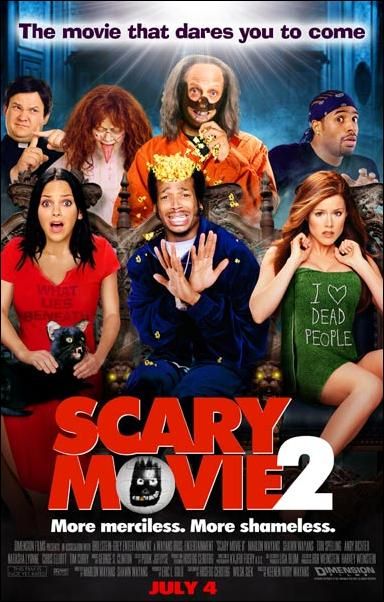
Scary Movie 2 Film Analysis


Scary Movie 2 is a 2001 parody movie, and is the second movie in the Scary Movie franchise. The director for this movie was Keenen Ivory Wayans and the screenplay was written by eight people in total. Eric L. Gold produced the movie which was then distributed by Dimension Films. Scary Movie 2 contains some of the same characters who were in the previous movie but apart from these, there are no actors who are well-known in the movie; instead it uses smaller actors, some of these being Anna Faris as Cindy, Regina Hall as Brenda, Shawn Wayans as Ray and Marlon Wayans as Shorty – who all featured in the first movie of the franchise.
            I think that this movie follows some of the rules from Todorov’s narrative theory, but not necessarily in the order constructed by Todorov himself. The start of the movie doesn’t have any relevance to the storyline of Scary Movie 2 and instead is a parody of The Exorcist. The beginning to the storyline of the movie is a year on from the last Scary Movie, and the four characters from the previous movie – Cindy, Shorty, Brenda and Ray – are all at college and are trying to start a new life after the events that happened in the last movie and so this is the starting equilibrium for the movie. By having this is as the equilibrium, it means those audiences who didn’t watch the previous movie can become familiar with who the main characters of the movie are going to be and it also shows that something is going to happen with these characters because life is so normal for them at the time. The next stage is for an event to take place and in this case, the students Professor asks them to go on a trip to a haunted house, unbeknown to the students that they would be bait for the paranormal activity that takes place in the house. The teens eventually find out about their Professors plans after all the incidents that have taken place in the house and this is the next stage in Todorov’s theory where the event is recognised, and so from this the next stage has to be revealed and this is where there is an attempt to fix the problem or the event that has just taken place. The teens attempt to fix the event that has just taken place by equipping themselves with several technological devices that will injure the spectral enemies in the Hell House. Eventually the teens manage to lure Kane the ghost toward a device that destroys him all whilst destroying a skeleton, and a possessed Hanson. Two months later, there is a new equilibrium where the teens are all back in college, Cindy and Buddy are in a relationship and look after the parrot from the Hell House, however Cindy see’s Hanson again and the movie ends with Hanson getting run over and killed for good by Shorty. By leaving the movie without a real sense of a new equilibrium like Todorov’s theory says should happen, it makes the audience think there a movie could be made to follow this one.
            When watching a movie, the audience always have in mind the types of things that should be in the movie depending on the genre of it, for example a comedy movie is expected to have a lot of comedic moment otherwise it wouldn’t fit the genre, and sometimes two genre cross each other and this is what happens in this movie because they are some parody moment in it, as well as it being a horror and comedy. So for this movie to be successful, the movie had to marketed right and attract the right audience, this is made easier as it is a sequel and so the producers know what to put into the movie and so this makes the expectations a little less pressurising. For a movie of so many genres, the audience will expect aspects from all the genres to be in it – mainly comedy and horror – so the audience will expect it to have slight elements of horror but nothing to horrific because it will have the comedy factor to it and I think for this movie, it is more about the comedy side of things rather than the horror side. But because this is the second movie in the franchise, the audience will expect the ideas to have advanced from last time and I think they would expect the movie to be funnier and have new jokes in it.
            There are a few scenes in the movie that hold a small element of horror but most of the movie is based on the comedy genre and so a lot of the scenes hold elements of horror more than anything. Two scenes in the movie are parodies of other movies and these are; the start of the movie consists of a parody from The Exorcist and towards the end of the movie there is a scene where Cindy, Theo and Brenda fight a possessed Hanson and it turns into a parody scene from Charlie’s Angels. The scenes that hold an element of horror are when the skeleton chases Cindy, the ghosts who create incidents in the house and the housekeeper at Hell House is also weird looking and so is there to creep the audience out. These are some of the only horror elements that are in the movie. Most of the movie is built up on comedy and so the whole movie is based on jokes and taking something that shouldn’t necessarily be funny and making it humorous for the audience. Parody movies were a genre of movie that was often overlooked but it is now one of the most commonly profitable at the box office, and so by bringing this element to the movie, it means that the movie should become quite successful at the box office. And horror-comedies have also recently become more popular and so by bringing elements of this genre into the movie it means that there aren’t too many expectations as at the time of its release the genre wasn’t too popular.
            According to Propp’s Character Functions, the audience should be able to pick out a clear victim, villain, hero and many other characters. For this movie in particular the Professor seems like a normal character at the start of the movie and we get further into the storyline it becomes clear to the audience that this is not the case, and in fact the Professor could be seen as the villain for the movie. This is because he uses the students as bait for his project and he also hopes that he’ll get something from the college girls that he takes on the trip with him – the Professor eventually gets killed by a female ghost who lives in the mansion. The Professor has a helper who the audience can assume will also be villainous as they will think he helped in the plans that the Professor had but once the Professor is killed, it turns out that Dwight is willing to help the students try and escape the mansion whilst killing all the ghosts in the process and so he is the helper for the movie as he provides the students with the weapons they need to defend themselves with. Due to all the students being taken away to mansion for bait, it can be said that they are all victims in this movie but at the same time they all become hero’s because they manage to escape with help and they also manage to kill all the ghosts and stop the paranormal activity that goes on in the Hell House. Shorty continues to be a hero right until the end of the movie where Hanson is back to get Cindy but before he can do that Shorty runs him over and kills him for good. I think that this movie does conform to some of Propp’s ideas about character functions; some of them are just less obvious in the movie.
            There is a clear of opposition of Good vs. Evil in this movie and this shown through the way that the students are all on the good side and the Professor along with all the other things in the house such as the cat that attacks Cindy, the large weed plant, all the ghosts and even the toy clown that comes to life are on the evil side. We see the fight between these oppositions take place towards the end of the film in which the students manage to defeat the evil side and so it can be clearly seen that Strauss’ theory works in the case of the movie.
            In conclusion, this is a movie that conforms to many of the typical elements that are needed in it and is a prime example of a film that uses a narrative structure, the idea of binary opposites and character functions. I think that if the film hadn’t followed these conventions then it wouldn’t have been as successful therefore all these theories are an important piece to this movie. The typical aspects such as the comedy and the fact that it parodies other films is what mainly made the film so successful globally and this is why audiences have wanted more films from the Scary Movie franchise. 


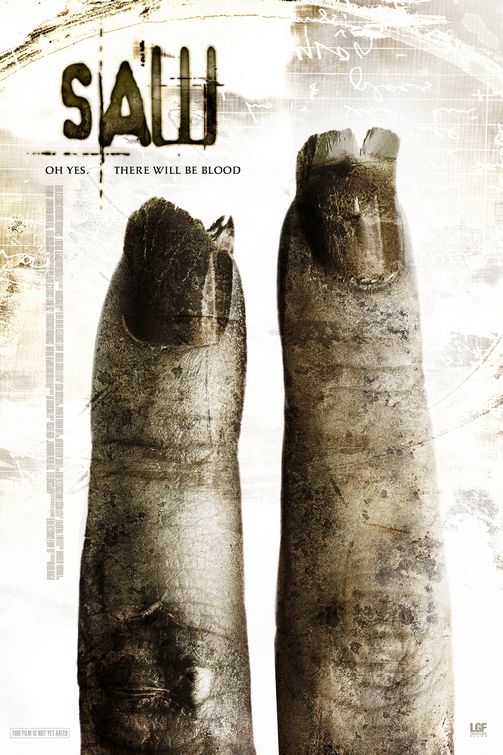
Saw II Film Analysis


Saw II is a Canadian-American horror movie that was released in October 2005. The director for this movie was Darren Lynn Bousman, who also contributed to some of the screenplay along with Leigh Whannell. Gregg Hoffman, Mark Burg and Oren Koules all contributed to the production of this horror movie and it was then distributed by Lionsgate. Saw II doesn’t contain any well-known stars and instead uses smaller actors, some of these being; Donnie Wahlberg who plays the corrupted police officer; Erik Knudsen as the Eric the police officers son; Tobin Bell as John otherwise known as Jigsaw and Amanda Young who plays Shawnee – a player of the game.
I think that this movie follows some of the rules from Todorov’s narrative theory however it is a more unusual approach to the structured theory. The beginning of the movie doesn’t have much relevance to the rest of the storyline and so therefore I wouldn’t say that this is the movies starting equilibrium, instead the equilibrium for the movie is the next scene where two people can be seen arguing to which one of them leaves and the other (who is a Detective) is soon called away to a scene of a death. Up until this point, it would seem that this is something that regularly happens and therefore the storyline is showing a normal life. However, the crime scene that the Detective is called away to is what is significant to the rest of the storyline because the symbol of a padlock can be seen on the device around the victim’s neck and this becomes the signifier for other deaths and also for the murderer. The next stage in the theory is an event and this event is the kidnapping of 8 people who have been put in a house full of saw traps and this is then recognised when the SWAT team of detectives follow the clues from the last death and find what they think is live CCTV footage from a house where all the victims are being kept – one of these victims being the main Detectives son, and this acts as the next stage to Todorov’s theory where the event is recognised. The next stage to the theory isn’t ever fully completed, because most of the people who are kidnapped don’t make it out of the house and the house is never found instead it turns out one of the people who were kidnapped was in with Jigsaw and the son of the Detective is found in a safe. To finish the movie there isn’t much showing of a new equilibrium instead it shows the Detective in his own saw trap and the audience don’t know whether he makes it out or not. I think that the narrative for the movie follows some of the stages of Todorov’s theory however they aren’t always in the right order and some of the stages are missed out completely or never finished.
When an audience go to watch any genre of movie, they almost always know what to expect unless it is a completely new genre. This is mainly because every genre of movie has its own elements that make it recognisable to an audience which makes marketing the movie a lot easier – for example being able to attract the right audience. Due to this movie being part of the horror genre it is clear that there will be certain expectations such as for it to be horrific and terrify the audience and how it does this varies. For this movie in particular, it would be expected that it will contain elements of gore and gore that is advanced due to the aspects that the previous movie held. As this movie is a sequel to the first Saw, I think that audience would expect it to have a lot more gore than the previous movie and more advanced trap ideas. As well as this they may also expect to find certain character from the previous movie also.
There are a lot of scenes in the movie that hold a lot of gore and this is the main aspect of this movie that allows the audience to know that it is a horror. The Saw movies are made of many different traps and this is the main element of horror in the movies, for Saw II specifically, there were around 9 different traps. One of the more horrific traps for this movie was ‘The Needle Pit’ and this consisted of the middle of a room being filled with used syringes, and one of the victims had to jump into the pit and find the key to unlock the door and gain another antidote, the idea of the trap was that it would be like “finding a needle in a haystack.” Another one of the traps that was used in this movie was ‘The Nerve Gas House’ which was the large trap that has other traps inside of it, for this trap all the victims awoke in a house where they were breathing in a deadly gas to which they had to find the antidotes in each of the smaller traps in order to survive. This trap required all the victims to work together and this is something that doesn’t happen and if the audience have watched the precious Saw movie, will know won’t happen and therefore a lot of deaths take place. All the elements that make this movie a horror, is what allows it to be placed in the gore category for the history of horror movies and as more movies are made, we expect more gore to come out of them.
As an audience, it is unclear of who is a victim and who is a villain (Propp’s Character Functions) in the movie to begin with, this is because we think these people have been placed in the trapped house are victims of Jigsaw’s plans when in fact they have all been put there with reasoning which could lead the audience to believe that they are villains in some ways. One of the characters who has been best displayed is Amanda because throughout the movie, the audience believe that she becomes a victim of the other kidnappers attacks (she was also in the previous Saw movie) and it isn’t until the end of the movie that the audience find out she had been one of the villains all along and has been helping in Jigsaw’s plans – she also ends of locking Detective Matthews in ‘The Bathroom Trap’ where he is left to die. The main villain for this movie and the audience know this because he is the one who knows where the Nerve Gas House and he is the one who planned the kidnapping of the people who have been put in the house. However, even when the movie has ended, the audience are still unclear on whether Detective Matthews is a victim or not, this is because he doesn’t come across as having any victim like qualities and in one scene, he beats up Jigsaw and so he wouldn’t come across as a character who is a victim in the movie, but at the end he is placed in a trap and so in this sense he is a victim but the reasons for him being put in the trap could lead to him being seen as more of a villain – although throughout the movie, many audiences will be on the side of what seems the corrupt Detective.
According to Strauss’ theory of binary opposition, a movie should show an opposition and for this movie it could be the idea of Good vs. Evil, however the whole movie does conform to this idea and it challenges it in a lot of ways. For example, it is uncertain whether some characters are victims or not and so it can’t be seen whether they are trying to defeat ‘evil.’ This means that the audience can’t be sure what is ‘good’ and what is ‘evil’ and so it’s not until the end of the movie whether it can be determined that good had triumphed evil or vice versa.
In conclusion, Saw II is a movie that doesn’t follow too many conventions of movies in terms of its characters and its narrative, however it does follow the conventions that make it a horror movie and this could be seen as the most important aspect because without these aspects, the movie wouldn’t be a horror. It’s the typical aspects such as the tension and the questioning of what will happen next and who will survive throughout the movie, along with the settings for the movie such as the abandoned and secluded house as well the fact that the movie doesn’t use a lot of lighting and so this is creates a creepier environment. With all the elements that Saw does hold, I think this is what has helped it become a successful film globally and this is why there is a demand for more movies similar to it. 

Wednesday, 27 March 2013

General Audience Research


To have a movie that will be accepted by an audience and become successful it needs to attract the right people and connect with the audience that is targeted at. For any movie distributor, knowing who their audience is is a key aspect, as these will be the people that watch the movie and then review it, therefore telling others whether the movie is worth watching or not. If a movie has a negative response, it means that the movie will reduce in sales and audience views, and vice versa, if a movie has a positive response, sales will increase and so will audience views and so this is why targeting the audience is so important for a movie distributor. However, if the audience gives negative reviews on a movie, it makes it easier to know what to improve on and therefore make future movies more successful.

Audiences are usually influenced to go and see a movie through the actors in it, and this is something that is found in any genre of movie. Often it is seen that if an American movie is coming out, it has a lot of American actors in it, and the same for other countries, another popular one being Britain. But it doesn’t mean to say that if a movie is popular in America, it won’t be popular in Britain and vice versa. By adding actors who are well known into movies, it means that the audience are more likely to relate to the characters, and so this means there are various demographics such as age, religion, class and gender that the audience can relate to.

According the uses and gratifications theory, many audience watch movies and television for a reason and one of the main reasons is Personal Identity. This is where the audience can find themselves indentifying with someone in the movie or television programmes, and from this they can learn how to behave in certain situations. An example of this is in the film The Notebook which is based around a couple in which one of them has Alzheimer’s and so others may find comfort in how the other member in the relationship deals with the situation if they feel they are in a similar situation, and so this may have been part of the reason for this film becoming successful.

The film industry is something that is continuingly changing, and so the larger the company the more films they will release therefore gaining more of an audience. A large company such as Warner Brothers who releases a lot of films is a popular company not only for what they release but because everyone knows who Warner Brothers are. With Warner Brothers releasing films such as Harry Potter, which was very popular, means that if audiences liked this film it is quite possible that they will go and see other films released by the Warner Brothers Company. 


It can be seen from the charts above that it is 25 – 39 years old who go to cinema more often than others and so this means that most films will be targeted for this age range as these are the people who are most likely going to go and watch the movie. I think the age of people how go to the cinema is affected by who can watch certain films due to film ratings and so this sometimes counteracts with who can watch a film that is rated as a 15 or an 18 rating. Films are usually a higher rating for certain reasons and so a lot of films are a 12 or higher and this means that a lot of younger audiences don’t go to the cinema as often and instead wait to watch films when they are released on DVD. And it can also be seen that there is an almost even split between what gender goes to cinema more often and so I don’t think that this affects what is shown in the cinema and therefore doesn’t affect what sort of film distributors want to release. I think there is no significant difference between what gender goes to the cinema more often as women are more likely to be able to relate to certain characters on screen and find emotional attachment whereas men like films that give them action and situations to imagine themselves in. Another reason for the gender being an even split is because a lot of films are aimed at couples, and so this means that both genders will be visiting the cinemas in order to see movies. A lot of these films, especially horror are good at targeting couples and this is because they are able to comfort each other while watching a film. Many women are easily scared by things that they see in horror films and sometimes in other genre of films as well, where men being more masculine like to feel powerful in these situations and so they often don’t feel phased by the things they see on screen and instead take it upon themselves to comfort the women. This then elevates the males’ strength and power because he has managed to take control of the situation.

Tuesday, 26 February 2013

Horror Character Analysis

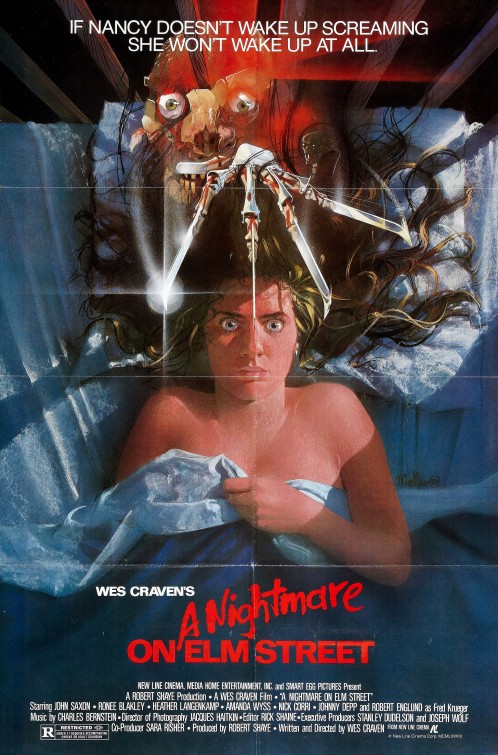
Freddy Krueger
Freddy Krueger is fictional character and the villain of A Nightmare on Elm Street series. He appears as a disfigured serial killer who uses a glove armed with razors to kill his victims in their dreams, causing their deaths in the walking world as well. However, whenever he is put into real world he has the normal human vulnerability.
Krueger was created by Wes Craven and has been consistently portrayed by Robert Englund since his first appearance. However in the 2010 remake he was portrayed by Academy Award-nominee Jackie Earle Hayley.
Freddie Krueger is a vengeful spirit who attacks his victims from within their dreams, who is most commonly identified by his burned, disfigure face, red and dark green striped sweater, brown fedora and trademark metal-clawed brown leather glove on his right hand. Wizard magazine rated him the 14th greatest villain; the British television channel Sky2 listed him 8th. In 2012, Freddy won an award for the Best Villain at the Scream Awards.
Robert Englund has said many times that he feels the characters represents neglect, particularly that suffered by children. The character more broadly represents the subconscious fears of others.
Wes craven says his inspiration for the basis of Freddy Krueger’s power stemmed from several stories in the Los Angeles Times about a series of mysterious deaths: All the victims had reported recurring nightmares and died in their sleep. Along with this his inspiration came from a bully from his school during his youth, a disfigured homeless man who had frightened him when he was 11, and the 1970’s pop son “Dream Weaver” by Gary Wright. It has also been claimed that the Wes Craven’s inspiration for Freddy’s infamous glove was from his hat, as he watched it claw the side of his couch one night.
Freddy’s claw/glove is used in A Nightmare on Elm Street but it has also been appeared in Evil Dead II: Dead by Dawn above the door in the tool shed, as well as this it also appears in Bride of Chucky.

A Nightmare on Elm Street is an American horror franchise that includes seven slasher movies, one re-make, one extra crossover film, comic books, a television show and novels. The franchise begins with a series of films which were created by Wes Craven, based on the fictional character Freddy Krueger. The films collectively grossed over $455 million at the box-office worldwide.
The original film was released in 1984 and then a series of sequels produced by the film company New Line Cinema followed. In 1988, a television series produced with Freddy as the host, the series featured episodes with independent plots. Twelve novels, separate from the adaptations of the films and multiple comic book series were published featuring Freddy Krueger as well as a crossover film featuring follow horror icon Jason Voorhees from the Friday the 13th franchise.
A Nightmare on Elm Street (1984)
A Nightmare on Elm Street 2: Freddy’s Revenge (1985)
A Nightmare on Elm Street 3: Dream Warriors (1987)
A Nightmare on Elm Street 4: The Dream Master (1988)
A Nightmare on Elm Street: The Dream Child (1989)
Freddy’s Dead: The Final Nightmare (1991)
Wes Craven’s New Nightmare (1994)
Freddy vs. Jason (2003)
A Nightmare on Elm Street (2010) – remake
Wes Craven
A Nightmare on Elm Street sees the set up for the many of the following movies, it is set in the fictional Midwestern town of springwood, Ohio and the plot revolves around several teenagers who are stalked and killed in their dreams. As the series increases, Freddy’s back story is revealed, in A Nightmare on Elm Street 3: Dream Warriors, the protagonists learn that Freddy was conceived when his mother as gang raped by a group of mental patients – therefore making him “the son of 100 maniacs”. A Nightmare on Elm Street: The Dream Child is the fifth instalment of the series and the general tone is more gothic and dark in this film, compared to the films before and uses a blue filter lighting technique in most scenes. Freddy’s Dead: The Final Nightmare depicts Freddy’s traumatic childhood; he is adopted as a child by an abusive alcoholic who teaches him how to torture animals and inflict pain on himself; Freddy eventually murders him and becomes a serial killer. Wes Craven’s New Nightmare is the seventh instalment of The Nightmare on Elm Street series; however it doesn’t follow the series continuity. The film is intending to show more of what Craven intentionally depicted Freddy as – more menacing and less comical, with an updated attire and appearance in general. The cross over film in the series was Freddy vs. Jason
            Throughout the series, Freddy’s potential victims often experience dreams of young children, jumping rope and chanting a rhyme to the tune of the “one, two, Freddy’s coming for you...” often as an omen to Freddy’s presence or a sign of his attacks.


Thursday, 21 February 2013

Hannibal Rising Trailer Analysis


            The trailer that I have decided to analyse is Hannibal Rising, I have chosen this trailer because it isn't very recent like one of the trailers I have analysed but isn't as old as another one that I have analysed. This way it gives me a good idea of how trailers have advanced and will keep on advancing. It is also a horror film that focuses on gore and so it gives me an idea on what is typically shown during this type of horror film trailer.
            The title of the film is often shown at the end of a trailer, this is because it is the last thing that the audience will see and therefore it is the last thing that they remember, which is a good marketing point for the film. As well as gaining a wider audience it means that the audience have to watch the trailer until the end to find out what the name of the film is. However, in the this trailer, the title is seen towards the end but there is some frames after it, which isn't typically what happens in a film trailer. However the font is still shown in a bold, large font so that it is easily seen by the audience.
            In the trailer for Hannibal Rising, unusually they don't highlight any of the actors names that are featured in the film and from this the audience can assume that there are no actors that are recognisable or big in the film. The trailer does show the names of the main actors in the film but only in the last frame, and so it isn't shown on screen for a very long time and it doesn't give the audience a chance to read the names of the actors in the film. As well as not being on the screen very long, it is also shown in a small font so that the audience have to look closely to see what the writing says, and this means that they won't usually bother trying to read it. By not using any large actors in the film it does show that the film doesn't use actors as a selling point for the film, as usually if a film has big or recognisable actors in it, it is more likely to gain an audience.
               The trailer for Hannibal Rising goes through a series of events and actions that are taken from the film but without watching the film, the audience won't know whether these events are placed in chronological order. The trailer begins as a tranquil setting that invites the audience in to watch it, it introduces Hannibal Lecter and tells the audience a little bit about him and his parents during the war. It shows the audience that Lecter was brought up during a war where his parents were killed and from this the audience can create a picture of what they expect Lecter to be like taking into consideration what he has been through  at a young age. We then see a few distorted frames that act as flashbacks that Lecter is seeing while he is asleep and this gives the audience a good insight into what his life was like. The next time Lecter is seen is when he is in a camp and the audience can see him being taunted by another male there and so Lecter acts out in violence, which the audience can see that is something that'll get progressively worse in the film. From there the pace changes continually speeding up and down so that little clips are shown that don't give too much of the plot away. These events include things such as the killing of people by Lecter himself or the build up to the killing of people as well as the investigation of the killings taking place. The audience also witness Lecter being interrogated by one of the inspectors multiple times. From all of this the audience can see that Lecter is clever in turning situations around and it also shows how much his violence progresses and what to expect in the film. By using the techniques such as short clips, pace speed changing and the jumbled order of the events it intrigues the audience into wondering what will happen next the trailer. But the trailer is also left ambiguously so that the audience will want to watch it and find out what happens to Lecter because they will be curious.
               Another feature of a film that has a massive impact on whether the audience want to see it or not is the music that is used in the trailer. If the music for the trailer doesn't fit what the audience are seeing, they are going to assume that the whole film isn't what sits supposed to be and doesn't fit together properly. To begin the trailer there is no music and instead the audience can hear that there is talking from the clips that explains more about Lecter. The music then starts at 50 seconds in the trailer, but it doesn't start slowly to bring the audience in because the trailer has already sped up. The music fades in and out a lot, and the beat changes continually increasing and decreasing as well because it fits well the changing pace of the trailer itself. The pace and beat of the trailer changes more noticeably when we see the title of the film and the music then fades out at the end of the trailer just before the audience see the trailer. There is no voiceover used in the trailer and so the trailer uses a lot of frames including dialogue to try and engage the audience so that they have to read it instead of listening to it. By doing this, they have to be watching the trailer to know what is going on. 
            The trailer lasts just under two and half minutes and in that time, for the film footage used, there is around 112 edits to being it altogether as a trailer. This means that there is an average of one edit per second, however the pace of the edits do vary throughout the whole trailer, as it doesn't keep at a consistent pace nor does it fir the typical convention of a horror film trailer. The starting pace of the trailer is slow as is expected of a horror trailer and then it starts to speed up rapidly to them slow down a little bit again, which isn't what usually happens in a trailer. However with the pace change, it helps the trailer and works with it, it also keeps the audience wondering what will happen next. The quicker pace allows the audience to become a distorted and wonder what is meant by what they are seeing whereas the slow pace allows them to register everything they are seeing creating a calm start for the trailer. 
            The last frame for the trailer is some writing that says 'read the Thomas Harris novel in hardcover from delacorte press.' This will either attract the audience into buying the book if they like the look of the film or go and watch the film after seeing the trailer, or it will attract people into watching the film if they have read the book and enjoyed it. BY showing this at the end for a reasonable amount of time, they want the audience to see it and read it as it is a good selling point for the film and the book.
            As this is an American version of the trailer for Hannibal Rising, at the beginning of the trailer, there is a warning for the trailer as well as the whole film itself. The film has been rated 'R' and so it is unsuitable for audiences under 17, which tells the audience watching the trailer that there are going to be scenes throughout the film that will be uncomfortable to watch and that it will live up to the standard of a gore filled horror film.

Friday, 30 November 2012

A Nightmare on Elm Street: Dream Warriors Trailer Analysis


            The trailer that I have decided to analyse is A Nightmare on Elm Street: Dream Warriors this is because it is over 30 years old and it gives me an idea as to how the technology within trailers has changed up to now. It also shows me how to create a trailer that shows no clips from the film and just bases around the title of the film instead.
            The title for the film is usually shown towards the end of the trailer, and the trailer for A Nightmare on Elm Street is no different. The film title is shown a frame before the end, but stays on the screen for around 8 seconds while other captions in the frame change, by showing the title for this amount of time it gives the audience enough time to register the name of the film and then becomes the last thing that they will remember from the trailer. The title is also shown in a large font so that the audience are drawn to it more than anything else on the frame. Also by showing the title nearer the end of the trailer, it makes sure that if the audience want to see the film’s title they have to watch the trailer through to the end. This is clever marketing for the film, as this will increase the audience for the trailer.
            As a unique selling point for the film, they have used a big actor which is mentioned in the trailer along with a well-known director so that the audience will want to go and watch the film. By using actors and directors that the audience know well, it gives the audience a reason to go and watch the film, for example Robert Englund playing Freddy Krueger like he has in the previous films may make the audience want to go and watch the new one because he was a good asset to the previous films. Similarly to this using Wes Craven – who at the time was becoming increasingly popular – as the director like he has been for the two previous films as well as films before the Nightmare on Elm Street series could attract the audience into going to watch the film if they like the way the he directs and presents in film on screen. By doing this, the trailer has pointed out both the director and the actor of the main villain as important factors for the trailer. The technique that has been used in this, is similar to the effect used in other trailer, if there are big names that are being presented through the trailer, they will normally be written in a larger font than any of the other names as it draws the audience in and creates a bigger reason for them to go and watch the film.
            This trailer doesn’t follow many events as such, as it a very basic trailer but certain things happen in the trailer to build up suspense. The trailer starts off with a child’s tricycle that is sat in the same child’s bedroom, and as the camera pans the bedroom the audience then see a little girl – who presumably the tricycle belongs to – sitting on her bed with a doll’s house, however instead of playing with the toy, the girl appears to be rocking back and forth while humming the tune to a common nursery rhyme. The audience are then shown a frame where there is an open window with the curtain blowing in the wind, this gives the connotation that we should be scared as it is night outside and that the child in her bed should be asleep but isn’t. As the nursery rhyme starts being sung, you see a crucifix which is laid on the child’s bedside table and the camera then pans past a glass of water which distorts the frame and the audience can’t see what is going on. The distorted frame then jumps to a bird’s eye view image of the girl and her doll house and then begins to zoom and move until you can see the front of the house clearly. If the audience have watched the previous two films, they will recognise the house as being the main house in the town that is affected. And as the suspense has been built up very slowly and quietly, Freddy Krueger’s claw suddenly punches through the roof of the doll’s house as his voice finishes off singing the nursery rhyme with different words.
            Another aspect of trailers that has an impact on whether the audience will want to go and watch the film is the music that is used in the trailer. The music has to fit in with the pace of the editing and the overall trailer itself. To fit with the pace of the trailer, the music begins a soft slow humming of a nursery rhyme which goes well with the slow editing pace of the trailer the whole way through. The pace of the nursery rhyme does change in the trailer at any point even when the little girl starts singing along to the tune of the rhyme. We see that the girl begins to sing the words as soon as we have seen the crucifix and then the glass of water that distorts the vision of the camera. As a follow on film, fans of the A Nightmare on Elm Street series will recognise the rhyme due to it being the rhyme that is always played before Freddy appears in people’s dreams, it almost like a warning for the audience. However, as some audiences will know this is a warning for others, the ending to the rhyme could be seen as frightening because Freddy’s claw punches through the dolls house and the last words are changed from “never sleep again” to “Freddy’s back again” in the voice of Freddy Krueger himself.
            As the trailer for A Nightmare on Elm Street 3 is around 35 years older than the more recent film trailer, there was less technology that could be used to create effects and this reflects in the creation of this trailer in particular. The trailer pace is one that doesn’t speed up or slow down at any point and instead it stays at constant slow pace. For pace of the trailer, there aren’t a lot of edits that are used, and due to the when it was produced there were fewer locations that could be used and so this trailer is limited to just one location that is used throughout. However, in comparison to some of the faster scenes that you would expect to see in the film as it is a slasher, the trailer still manages to draw your attention because you’re expecting something to make you jump.
            The final frame for the trailer it consists of a large font placed in the centre of the frame with the caption “coming soon to a theatre near you.” The writing is in a red colour which signifies blood and it is places against a black background so that the writing stands out. It also mentions the distribution company at the bottom of the frame but it isn’t so easily seen if you don’t look for it.
            Similarly to most other trailers, A Nightmare on Elm Street: Dream Warriors does not show the audience the BBFC classification rating during it, this is because the trailer is usually suitable to the time of day it is being shown. If it does not comprehend with the time of day it is being shown, it may be that the film is the same classification as the film that is being shown after the adverts.